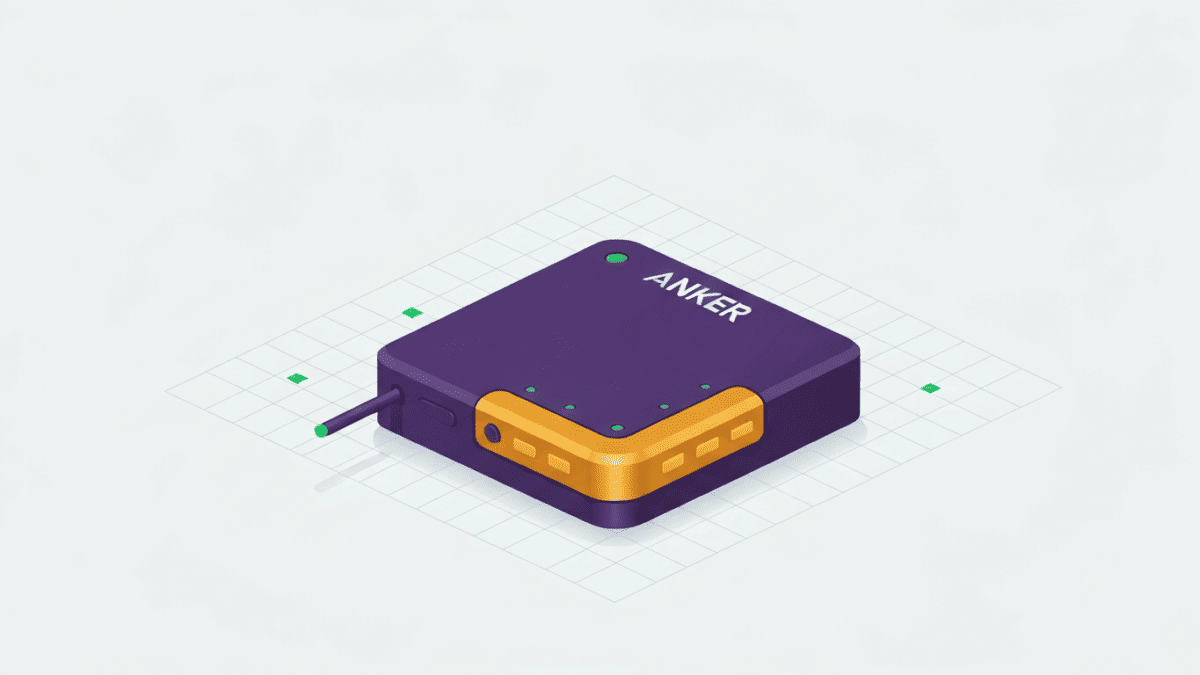
The Anker 737 Power Bank, sold under Anker’s PowerCore 24K name, is the company’s answer to a simple but demanding question: what if a single portable charger could refuel your laptop, your phone, and your tablet without ever finding a wall outlet? It is built around a large 24,000mAh cell and a headline 140W of USB-C output, which puts it in a small club of power banks that can genuinely fast-charge a laptop rather than just trickle it. This is a research-based assessment drawing on Anker’s published specifications and widely documented capabilities rather than a hands-on endurance test, but the 737 is a well-understood, mature product, and both its strengths and its trade-offs are clear.
What it does well
The defining feature is real laptop-class power. Over USB-C, using the Power Delivery 3.1 standard, the 737 can push up to 140W. That is enough to fast-charge many modern USB-C laptops, including several MacBook models, which is the capability that separates it from the crowd of banks that top out around 60W or 100W. If you have ever watched a lesser power bank barely hold a laptop’s battery steady under load, the difference here is meaningful: the 737 can actually add charge at a useful rate while you keep working.
Capacity is the second pillar. At 24,000mAh, or 86.4Wh, it holds enough energy to refill a typical smartphone several times over on a single charge, or to give a laptop a substantial top-up alongside a phone and earbuds. Crucially, that 86.4Wh figure sits under the 100Wh threshold most airlines apply to spare lithium batteries in carry-on baggage, so it remains flight-friendly for most travelers, subject to each carrier’s own rules. The three ports, two USB-C and one USB-A, let you charge multiple devices at once, and the bank intelligently distributes power across them.
Two more touches lift the experience above the basics. The 737 is bidirectional, meaning it recharges itself quickly when you feed it enough power, roughly an hour with a 140W wall charger, which is genuinely fast for a battery this large. And the color OLED display is one of the most useful you will find on a power bank. Instead of four vague dots, it shows exact remaining capacity, the live wattage flowing in or out, and time estimates, so you always know precisely where you stand. Anker also includes a 140W-rated USB-C cable and a travel pouch in the box, along with a 24-month warranty, so you are not immediately shopping for accessories.
Where it falls short
The clearest compromise is physical. All that capacity and output make the 737 a genuine brick. It is heavy and chunky compared with the slim 10,000mAh banks many people slip into a pocket, and it is something you deliberately pack in a bag rather than carry casually. That is an inherent trade-off of the category, not a design flaw, but it is the first thing prospective buyers should weigh honestly. If your daily need is just topping up a phone, this is far more charger than you require.
There are also caveats around the marquee 140W figure. Reaching it requires both a device that accepts 140W of USB-C input and a cable rated for that level; plenty of laptops charge at lower ceilings, so you may see less than the headline number depending on your hardware. The fastest self-recharge similarly depends on a high-wattage wall charger that Anker does not include, so out of the box your refill times will be longer unless you already own a capable PD adapter. Compatibility is broad but not universal, with a few high-draw machines, such as certain gaming laptops, falling outside its supported range. And then there is price: the 737 sits well above simpler high-capacity banks, so you are paying a premium specifically for the laptop-grade output and the smart display.
Pricing & value
The 737 is a one-time purchase positioned at the premium end of the power-bank market. It launched around the 150-dollar mark and has more commonly settled nearer the 100-to-110-dollar range since, with sales pushing it lower at times. That places it clearly above basic banks, but the comparison that matters is against other chargers that can actually fast-charge a laptop, and there the 737’s blend of 140W output, 24,000mAh capacity, and an informative display is competitive. For a traveler or hybrid worker who would otherwise carry a laptop charger plus a phone bank, consolidating into one device has real value. Pricing varies by retailer, region, and promotion, so we do not quote an exact figure here. Please check current pricing before buying, and watch for the frequent discounts this model sees.
Who it’s for (and who should skip it)
The 737 is an excellent fit for people who travel or work away from outlets and genuinely need to power a USB-C laptop as well as smaller devices. If you fly regularly, work from cafes and airports, or want a single battery that covers a laptop, phone, and tablet through a long day, this is close to an ideal tool, and the airline-legal capacity plus the informative display make it especially travel-friendly. Photographers, field workers, and anyone running power-hungry gear on the move will appreciate the headroom.
You should skip it if your real need is simply topping up a phone, where a lighter, cheaper 10,000mAh bank will serve you better and weigh a fraction as much. Skip it too if your laptop does not charge over USB-C or draws more than the 737 can supply, since you would be paying for output you cannot use. And if minimizing what you carry matters more than capability, the size and weight here will feel like overkill.
The verdict
The Anker 737 Power Bank is one of the most capable portable chargers you can reasonably carry and fly with. Its 140W USB-C output, large 24,000mAh capacity, fast bidirectional recharging, and genuinely useful OLED display combine into a battery that can keep a laptop, phone, and tablet running through a demanding day. Its drawbacks, considerable weight and bulk, a premium price, and a headline wattage that depends on your other hardware, are real but narrow, and none undercut what it is fundamentally good at. For travelers and mobile workers who need laptop-grade power on the go, it is easy to recommend, and it becomes a smart buy whenever it dips below its launch price.