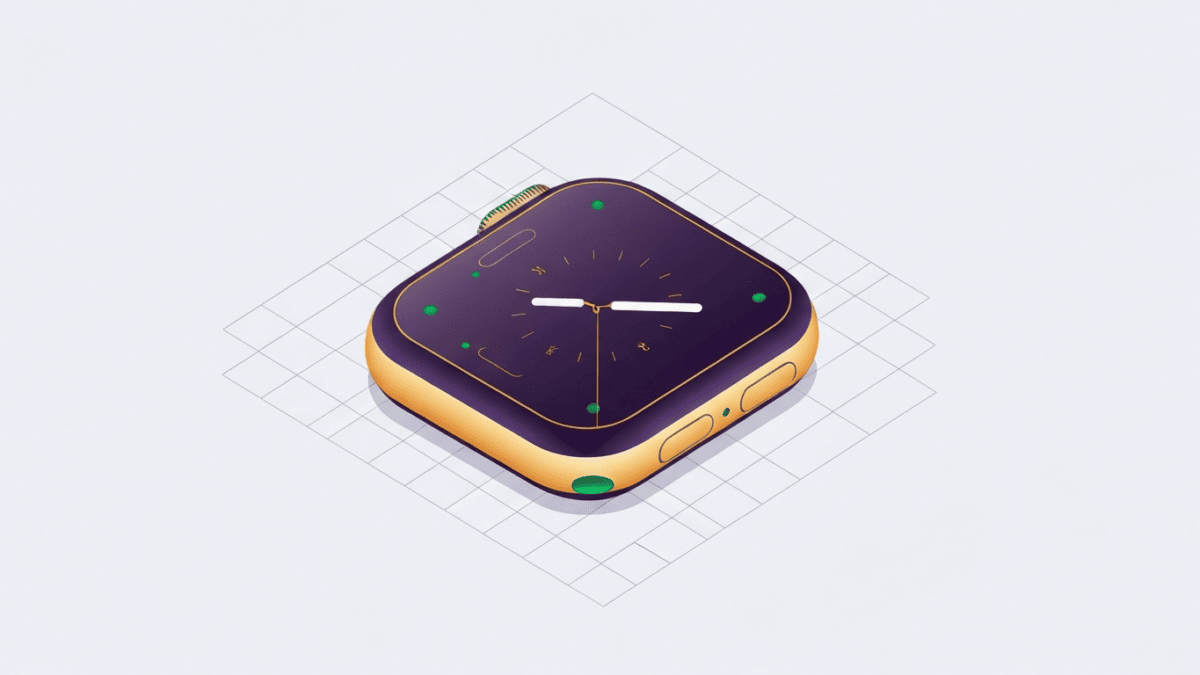
The Apple Watch Series 9 arrived as the most substantive Apple Watch update in years, even if it did not look the part. The story is not the design, which carries over the familiar rounded-square silhouette, but the silicon inside it. The new S9 chip finally delivered the first real processing jump since the Series 6, and that extra headroom unlocked features that older models cannot run, most notably the Double Tap gesture and on-device Siri. It remains a highly polished smartwatch, though it carries forward the same battery and platform constraints that have shaped the entire Apple Watch line. This assessment draws on Apple’s published specifications and widely documented capabilities rather than a long-term wear test, but the Series 9 is a well-understood product, and its balance of strengths and compromises is clear.
What it does well
Performance is the real headline. The S9 SiP packs 5.6 billion transistors, a GPU Apple describes as 30% faster, and a new four-core Neural Engine, and it is the first meaningful silicon upgrade in several generations. In everyday use that translates into a watch that feels quicker and more fluid, and it is the enabling technology behind the marquee new interaction, Double Tap. By tapping your index finger and thumb together twice, you can answer a call, pause music, stop a timer, or snooze an alarm without touching the screen or using your other hand. Apple attributes the gesture’s reliability to the S9’s processing power, which is why it is exclusive to the Series 9. It is a small thing that proves genuinely useful when your other hand is full.
The display is another clear win. Peak brightness climbs to 2000 nits, double that of the Series 8, making the screen easy to read in direct sunlight while still dimming low for nighttime glances. On-device Siri is a quieter but welcome improvement: many requests, such as starting a workout or setting a timer, are now processed locally without needing Wi-Fi or cellular, which makes responses faster and more reliable. Under the hood, storage doubles to 64GB, leaving ample room for offline music, podcasts, and larger watchOS updates, and a second-generation Ultra Wideband chip improves Precision Finding for a misplaced iPhone and enables smarter Handoff with HomePod.
As a health and fitness device, the Series 9 is comprehensive. It carries an optical heart rate sensor, an electrical heart sensor for ECG, blood oxygen hardware, temperature sensing for cycle tracking and wellness insights, and safety features including crash and fall detection. Combined with watchOS and Apple’s tight iPhone integration, it remains one of the most capable and easy-to-use wellness companions available for iPhone owners.
Where it falls short
Battery life is the perennial limitation. Apple rates the Series 9 at up to 18 hours of all-day use, with Low Power Mode extending that further, which in practice means charging roughly once a day. That cadence is workable, but it makes dependable overnight sleep tracking awkward, since you have to find a window during the day to top up. Buyers coming from fitness watches that last a week will feel the difference immediately, and it remains the single biggest quality-of-life constraint on the product.
Platform lock-in is absolute. The Series 9 requires an iPhone and an Apple ID to set up and operate, with no Android support whatsoever, so it is simply not an option for anyone outside the iPhone world. There is also the matter of iteration: visually and functionally the Series 9 is a modest step over the Series 8, and while Double Tap and the brighter screen are welcome, they are not enough to justify upgrading from a recent Apple Watch for most people. Finally, blood oxygen deserves a caveat. Regional regulatory disputes have affected the availability of that feature on Apple Watch, so depending on your country and when you bought the device, the blood oxygen function may be limited or disabled even though the sensor is physically present.
Pricing & value
The Apple Watch Series 9 is a one-time purchase that launched in the mainstream flagship smartwatch class, with aluminum models starting at a lower price and stainless steel commanding a premium and including cellular. Because it is now an older generation, it frequently sells below its original level, which improves its value considerably for anyone who does not need the very latest model. At a discount, it offers the S9 chip’s speed, Double Tap, the bright display, and Apple’s full health suite for less than the current flagship, which is a compelling proposition. Pricing varies by retailer, region, configuration, and promotion, so we do not quote an exact figure. Please check current pricing before buying, and compare against the current Apple Watch to see whether the newer model’s additions are worth the difference to you.
Who it’s for (and who should skip it)
The Series 9 is a strong fit for iPhone owners who want a polished, responsive smartwatch with excellent health and fitness tracking, a brilliantly bright display, and the convenience of Double Tap. It is especially appealing at a discount for someone upgrading from an older Apple Watch such as a Series 5 or 6, or a first-time buyer who wants Apple’s ecosystem without paying for the latest generation. Anyone who values a fast, well-integrated everyday wearable will be well served.
You should skip it if you use an Android phone, since it will not work with your device at all. Skip it too if multi-day battery life or robust, charge-free sleep tracking is a priority, because the roughly 18-hour rating means daily charging, and a dedicated fitness watch will serve those needs better. Owners of a recent Apple Watch have little reason to upgrade, and anyone who specifically needs blood oxygen readings should confirm the feature’s availability in their region before buying.
The verdict
The Apple Watch Series 9 is a refined, capable smartwatch that finally moved the platform forward on performance. The S9 chip makes it faster and enables the genuinely useful Double Tap gesture and on-device Siri, the 2000-nit display is excellent outdoors, and the health suite remains among the best for iPhone owners. Its limitations, an 18-hour battery, strict iPhone-only operation, iterative design, and region-dependent blood oxygen, are familiar and real, but none undermine what is a very good everyday wearable. For iPhone owners, particularly at a discount, it remains easy to recommend.